Resources and References
The information on this site is drawn from a range of botanical, horticultural, and scientific sources, including books, botanical institutions, plant databases, and established horticultural resources. This page highlights some of the references we rely on most often so readers can explore them further.
SANBI / PlantZAfrica
PlantZAfrica is a resource of the South African National Biodiversity Institute (SANBI) featuring extensive information on the plants of southern Africa. Its Aloe accounts are particularly useful for information on natural distribution, habitat, ecology, conservation, history, and cultivation, often accompanied by photographs from plants growing in habitat and in botanical gardens. We use PlantZAfrica as an important source for understanding Aloes in their natural environment and their performance in cultivation.
San Marcos Growers
San Marcos Growers maintained one of the most extensive online plant databases for plants suited to Mediterranean climates, with information drawn from decades of horticultural experience. The database includes detailed descriptions and photographs of a wide range of succulents, perennials, shrubs, trees, and other landscape plants. We consider it a valuable horticultural reference, particularly for information about cultivated plants and their performance in California gardens.
Aloes: The Definitive Guide
Susan Carter, J. J. Lavranos, L. E. Newton, and C. C. Walker. 2011. Royal Botanic Gardens, Kew.
A comprehensive treatment of the genus Aloe, covering more than 500 species and providing detailed information on morphology, distribution, habitat, taxonomy, and relationships. Published in 2011, it remains an important reference for Aloe identification and taxonomy, while newer sources are consulted where names or classifications have changed.
Aloes of Uganda: A Field Guide
A regional field guide by Thomas Cole and Tom Forrest documenting the Aloe species of Uganda, based on extensive fieldwork conducted throughout the country. The book provides species descriptions, distribution maps, photographs, habitat and ecological information, flowering periods, and conservation notes. We use it particularly as a reference for Aloe species native to Uganda and for information based on observations of plants in their natural habitats.
Garden Aloes: Growing and Breeding Cultivars and Hybrids
Gideon F. Smith and Estrela Figueiredo. 2015. Jacana Media.
A horticultural reference focused on Aloe cultivars and hybrids, with information on their characteristics, cultivation, flowering, breeding, and origins. Particularly useful for research into cultivated Aloe selections and hybrids, complementing species-level references such as Aloes: The Definitive Guide.
Plants of the World Online — Royal Botanic Gardens, Kew
Plants of the World Online (POWO) is a global botanical resource from the Royal Botanic Gardens, Kew, providing current information on plant names, taxonomy, synonyms, distribution, identification, and related botanical data. We use POWO particularly as a reference for accepted names, synonymy, geographic distribution, and current taxonomic treatment of Aloes.
International Succulent Introductions (ISI)
The Huntington Botanical Gardens.
The Huntington's International Succulent Introductions program has distributed new and rare succulents to collectors, nurseries, and institutions since 1958. The historical ISI catalogs are particularly useful for Aloe research because they document the introduction, provenance, descriptions, and horticultural history of many cultivated species, selections, and hybrids. The archived site contains catalogs through 2025, while current introductions are now offered through the Huntington Plant Sales website.
Resources: Historical ISI Catalogs (pre-2026) | Current Huntington Plant Sales / ISI Catalogs (2026 onward)
Aloes of the Huntington Gardens
A specialized online reference documenting the Aloe collection at The Huntington Botanical Gardens in Southern California. The site provides species accounts, photographs, and horticultural information based on plants grown in the Huntington collection. We use it as a useful horticultural and visual reference, particularly for comparing species and observing mature plants in cultivation.
Missouri Botanical Garden Plant Finder
The Missouri Botanical Garden Plant Finder provides horticultural information on more than 7,500 plants grown or evaluated in the Garden's Kemper Center display gardens. Although its Aloe selection is relatively small, we use it as a supplementary source for plant characteristics, cultivation information, and observations of plants in a botanical-garden setting.
Guildford Cycads — Aloe Species Articles
Guildford Cycads publishes a collection of detailed articles on Aloe species, with an emphasis on species characteristics, identification, habitat, cultivation, and observations from plants in cultivation. We use these articles as a supplementary horticultural reference, particularly when researching individual species and comparing information from other sources.
The Ruth Bancroft Garden — Plant Highlights
The Ruth Bancroft Garden maintains an extensive collection of drought- tolerant and succulent plants, with its Plant Highlights providing information on individual species based on plants grown in the Garden. We use these accounts as a supplementary horticultural reference for Aloes, Agaves, and other dry-climate plants, particularly for observations of plants in cultivation and their performance in a Mediterranean climate.
Aloes in Wonderland — Aloe Gallery
A photographic gallery documenting a diverse collection of Aloes grown at Aloes in Wonderland, a private botanic garden and rare plant nursery in Santa Barbara. The collection includes numerous uncommon species as well as hybrids and cultivated selections. We use the gallery as a supplementary visual and horticultural reference, particularly for comparing the appearance and mature form of Aloes in cultivation.
Llifle: Encyclopedia of Succulents
Llifle.
An extensive online reference covering succulent plants, including Aloe and related genera. Species accounts commonly include descriptions, distribution, habitat, synonyms, variation, and cultivation information. The site is particularly useful for comparing morphological details, historical names, and distribution information across Aloe species. It is used as a supplementary reference alongside primary taxonomic and horticultural sources.
Resource: Llifle: Encyclopedia of Succulents
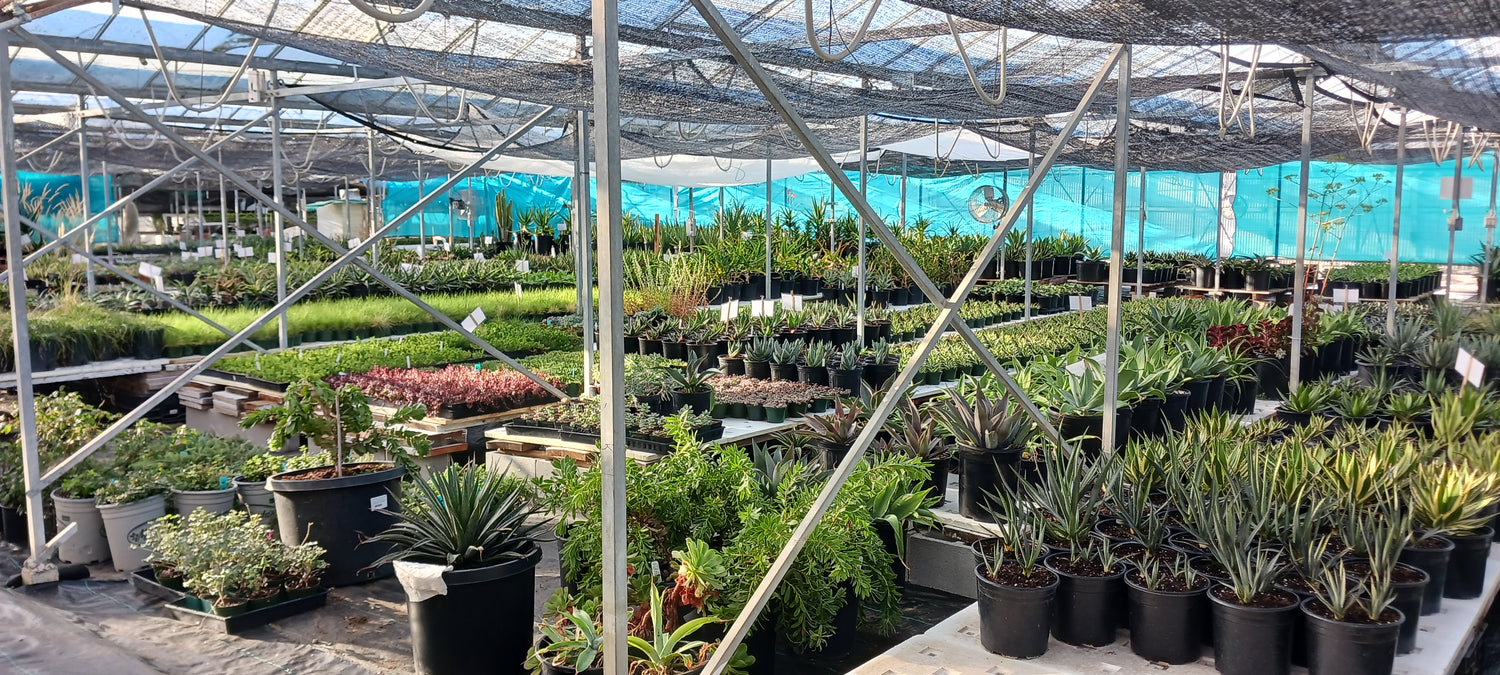
Nursery
Growing grounds are located in Halfmoon Bay, CA